
Review of Professional Management


Vikas Kumar1
1Department of Commerce, Himachal Pradesh University, Shimla, Himachal Pradesh, India

Creative Commons Non Commercial CC BY-NC: This article is distributed under the terms of the Creative Commons Attribution-NonCommercial 4.0 License (http://www.creativecommons.org/licenses/by-nc/4.0/) which permits non-Commercial use, reproduction and distribution of the work without further permission provided the original work is attributed.
This article is an exploration of how business policies affect the well-being of the LGBTQ+ workers. The qualitative methodology that was used to collect data was a focus group and a deep discussion with people who are lesbian, gay or bisexual, based in most industries. Thematic analysis demonstrated that the majority of LGBTQ+ workers view non-discrimination and diversity training as the inclusion policies that help employees to feel a sense of belonging, feel safe and feel satisfied with their jobs. On the other hand, such policies are not in place, and this causes alienation and stress. This study has shown that genuine organisational dedication to diversity and inclusion is an essential way to create a positive working environment. The results of the study have shown that proper policies in the companies not only improve the welfare of the LGBTQ+ employees but also the overall performance of the organisations. This study highlights the importance of ongoing work to help LGBTQ+ employees and proposes the additional investigation of long-term effects and industry-related practices.
LGBTQ+, corporate policies, employee well-being, workplace inclusion, qualitative research
Introduction
Workplace Context and Importance of LGBTQ+ Inclusion
The history of LGBTQ+ people joining the workplace has received particular focus in recent years, which is representative of society as a whole adopting a new approach towards inclusivity and equality. LGBTQ+ employees have been found to have special issues, such as discrimination, harassment and exclusion, which can have a devastating effect on their mental and professional happiness (Badgett et al., 2013). Alongside doing the right thing, creating an inclusive environment is crucial to businesses because studies have found that diverse and inclusive workplaces promote higher innovation and productivity (Hewlett et al., 2013). Research indicates that in cases where LGBTQ+ employees feel secure and valued, they will be more willing to participate, be loyal and make positive contributions to the success of the organisation (Day & Greene, 2008).
Overview of LGBTQ+ Inclusive Corporate Policies
The most common parts of the corporate policies oriented on the LGBTQ+ inclusion include the following: non-discrimination measures, diversity trainings and creation of resource groups (Colgan et al., 2007). The non-discrimination policy adopted by an organisation can protect the workers against harassment, threats or any other forms of prejudice based on their gender identity or sexual orientation. Diversity training programmes are meant to educate personnel on LGBTQ + issues and instil a climate that is defined by respect and understanding (Meyer, 2015). Also, the LGBTQ+ employee resource groups act as a means of support and advocacy in the organisation (Ragins & Cornwell, 2001). Organisations that are proactive and enforcers of these policies assume more favourable working environments and increased well-being of the workers (Durso et al., 2012).
Research Gap and Purpose of the Study
Despite the increasing implementation of inclusive policies, there remains a significant gap in understanding how these policies specifically affect the well-being of LGBTQ+ employees. Much of the existing literature focuses on the presence of policies rather than their actual impact (Ozeren, 2014). This study aims to fill that gap by conducting a qualitative analysis of LGBTQ+ employees’ actual encounters with company policies. By investigating the employees’ subjective well-being, this study tries to learn more about the efficacy of current policies and identify areas that need improvement.
Specific Research Inquiries
The foundation of this investigation is on the following research inquiries in order to fill the research gap:
Review of Existing Literature
Historical Context of LGBTQ+ Workplace Rights
The struggle for LGBTQ+ rights in the work environment has taken a different form during recent decades. First, homosexuals, lesbians and transgender people faced widespread institutional bias in the sense that there were no legislative standards in place to prevent discriminatory acts based on gender and sexual orientation. The issue of LGBTQ+ discrimination in the workplace did not receive significant focus in the United States until the 1990s (Badgett, 2001). The failure of the Employment Non-Discrimination Act to become law in 1994 was a breakthrough in ensuring that people were made aware of the need to have legal protections (BESL et al., 2020; Sears et al., 2021). In certain countries, including Canada and the United Kingdom, where the anti-discrimination law was implemented, it was quite late (Martín Rama, 2001). In most regions of the world, homosexuals and gay people experience legal and social difficulties in their efforts to readily integrate into the employment sphere (Kollman & Waites, 2009). The historical struggle to gain rights at the workplace has been characterised by gradual legal reforms, the campaign of LGBTQ+ organisations and the rise in the realisation of the economic benefits of diversity and inclusion (Patricia Hynes et al., 2017).
Key Theoretical Perspectives on Inclusion and Well-being
Among the basic theories, there are the theory frameworks, with the help of which the connection between the practices of the company and the welfare of the LGBTQ+ employees can be understood. According to the minority stress theory, a person who defines themselves as a sexual minority has to experience constant stress due to discrimination, prejudice and social stigma. It is a long-term trauma that causes them to be both physically and psychologically sick (Meyer, 2003). This theory holds that a favourable environment plays a role in alleviating such negative effects. According to the social identity theory, every person gains identity and self-worth in their identities and group affiliation, gender identity and sexual orientation (Tajfel & Turner, 2019). The recognition of their identities as LGBTQ+ by organisational policies will lead to employees having a heightened level of job satisfaction and psychological wellness (Ragins & Cornwell, 2001). The Job Demands–Resources (JD-R) model also gives an insight into how work environment resources, such as inclusive policies and favourable management, can enhance the well-being of the employees to reduce job stress (Bakker & Demerouti, 2007). This model posits that by providing adequate resources to their staff members who are gay, lesbian, transgender and queer, organisations are putting themselves in a situation of ensuring that they create a healthy workplace that will help in engaging with their employees and reducing burnout rates.
Empirical Evidence on LGBTQ+ Inclusive Policies
The empirical research has always shown that the well-being of the LGBTQ+ employees is positively influenced by the inclusive corporate policy. They discovered that cases of harassment at the workplace and the promotion of the sense of safety and inclusiveness are linked to the adoption of non-discrimination policies and diversity training programmes (Griffith & Hebl, 2002). In addition, it is found that LGBTQ+ employee resource organisations are heavily involved in social support and building a feeling of camaraderie in corporations (Colgan et al., 2007). These organisations not only help LGBTQ+ workers to overcome challenges in the work environment but also serve as advocates and policy change agents. In research studies related to organisational health and climate of employee relations, a conducive working environment has a lot of significance in influencing the well-being and empowerment of employees (Jhajharia et al., 2013). Research carried out by Badgett (2001) discovered that the deeper the LGBTQ+ non-discriminatory policy of the given company, the higher the degree of involvement among the employees and the lower the employee turnover. This is an indication that inclusive workplaces not only offer benefits to LGBTQ+ workers but also to the performance of an organisation in general. Likewise, the findings of a study conducted by Durso et al. (2012) emphasised the financial benefits of inclusivity, stating that organisations with a friendly reputation towards LGBTQ+ attract a wider range of talent and have a superior perception in the market. It has also been evidenced that supportive organisational practices maintain employee engagement and enhance the sense of belonging by the employees to their organisations (Bano, 2023). The impact of high-performance HR practices on the perception and experience of employees also has a positive influence, which solidifies the role of organisational policies in affecting the well-being (Verma & Rathore, 2023).
Gaps and Inconsistencies in the Literature
Although the issues of LGBTQ+ inclusion are well researched at the workplace, there are still a number of gaps and inconsistencies. There is a critical gap in the form of a lack of longitudinal studies that track the long-term implications of organisational policy on LGBTQ+ employees. Most of the past studies are cross-sectional nature, which gives a picture but not the overall picture of the impacts as time goes by (Ozeren, 2014). Also, a big part of the literature focuses more on major international companies and pays less attention to small and medium-sized enterprises (SMEs). This creates a knowledge gap on the effectiveness of the inclusion policy in small organisations that have minimal resources (Priola et al., 2014). The intersectionality should also be further studied, in how LGBTQ+ workers with various marginalised identities (e.g., race, disability) can feel included in the workplace (Bowleg, 2008). LGBTQ+ people are frequently discussed in the existing literature as a homogenous group, disregarding the differences within the community. Lastly, drawbacks exist in the quantification of policy effectiveness. Various researchers apply different metrics and scales to evaluate the effects of corporate policies, and it is not easy to compare the outcomes and generalise the findings (Hodgins et al., 2020). The standardisation of methods of measurement would be beneficial to overcome this problem and give a better understanding of the best practices related to LGBTQ+ inclusion.
Conceptual Framework
Conceptual Framework Guiding the Study
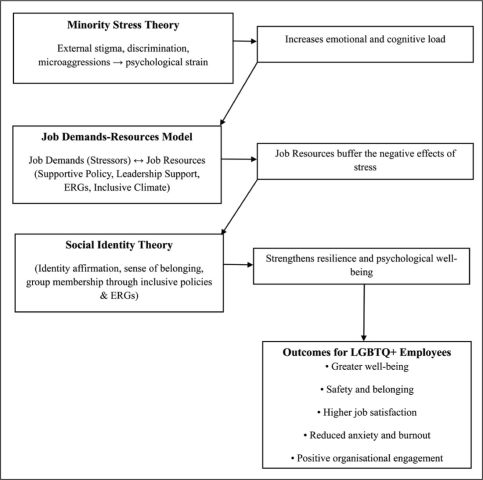
The research is based on the conceptual model, which comprises the JD-R model and the social identity theory, as well as the minority stress theory. A mix of the theories makes it a powerful prism in the investigation of the impact of corporate practices on the well-being of the employees of an LGBTQ+ group. The minority stress theory suggests that people who consider themselves as sexual minority are in constant stress, which is provoked by stigmatisation, prejudice and discrimination in society, and the effect of which affects the mental and physical health of these people negatively (Meyer, 2003). The theory focuses on the significance of the facilitating environment provision that reduces the effects of minority stress that is negative. One of the social identity theories postulated by Tajfel and Turner (1986) is founded on the belief that an individual identifies themselves and derives their self-esteem when they belong to different groups. This inclusion of the LGBTQ+ employees may be very helpful in their health and job satisfaction as it makes them feel appreciated and accepted in an organisation that values their identity (Ragins & Cornwell, 2001). The JD-R Model is an expression of Bakker and Demerouti (2007) that assumes that workplace resources, inclusive policies and supportive management can lead to more employee well-being by decreasing job demands and offering the level of support employees need. This model emphasises the importance of organisational resources in ensuring employee engagement and burnout reduction; furthermore, Figure 1 shows the conceptual research framework of the study.
Figure 1. Conceptual Research Model.
Explanation of Key Concepts and Their Interrelationships
Minority Stress: This concept refers to the unique stressors faced by LGBTQ+ individuals due to their marginalised status. These stressors include external events of discrimination and internal processes such as the expectation of rejection and internalised homophobia (Meyer, 2003). Corporate policies that promote inclusivity and protect against discrimination can alleviate these stressors, thereby enhancing LGBTQ+ employee well-being (Hatzenbuehler, 2009).
Job Demands–Resources (JD-R): Job demands (such as workload and emotional pressures) and job resources (such as support and autonomy) are believed to impact employee well-being according to the JD-R Model (Bakker & Demerouti, 2007). Corporate policies that are inclusive work as important job resources that assist LGBTQ+ individuals to avoid stress, and they also encourage engagement (Schaufeli & Bakker, 2004).
Social Identity: Perceived membership in social groups is the source of an individual’s self-concept, as stated by social identity theory (Tajfel & Turner, 2019). LGBTQ+ employees who feel accepted and valued in their workplace are likely to have higher self-esteem and job satisfaction (Day & Greene, 2008). Corporate policies that recognise and celebrate diversity contribute to feeling a part of a community and having a positive social identity (Ashforth & Mael, 1989).
Interrelationships: The following are the interrelationships between these concepts:
Minority Stress and Social Identity: Inclusive policies with a supportive environment by recognising the LGBTQ+ identity will alleviate minority stress, improve social identity and well-being (Meyer, 2015; Ragins & Cornwell, 2001).
Social Identity and JD-R: Inclusive policies lead to positive social identity, which in turn increases the perceived access to job resources, thus resulting in increased employee engagement and decreased burnout (Bakker & Demerouti, 2007; Tajfel & Turner, 2019).
JD-R and Minority Stress: Inclusion in corporate policies allows adequate job resources to reduce the consequences of minority stress, which enhances the overall well-being and job performance (Meyer, 2003; Schaufeli & Bakker, 2004).
Methodology
Qualitative Research Design and Approach
The study is qualitative research aimed at outlining the impact of corporate policies on the mental health of the LGBTQ+ employees. The qualitative research approach is highly appropriate to the current study because it gives a more elaborate description of phenomena and perceptions of interviewees (Creswell & Poth, 2018). It is an interpretative methodology and attempts to provide insight into the way the business policy affects the lives of LGBTQ+ employees by explaining them in a sought-after detail. The proposed qualitative research will help to illuminate the dark side of inclusion in the workplace environment and its impact on the welfare and well-being of employees (Denzin & Lincoln, 2017).
Description of the Sample and Sampling Techniques
This study employed 250 LGBTQ+ employees in different industries and organisations located in Delhi, India, as the sample. Delhi, as a capital city in India, has a diversified and multicultural workforce and is, therefore, the most suitable place to collect data. It is home to a large number of foreign businesses, state machinery and start-ups, and that is why it is a good place to investigate the impact of corporate policies on the LGBTQ+ community of the various organisations. Delhi is also more convenient and easily accessible in regard to deep interviews and focus groups. The other areas that may be employed to enhance the sample are the technology sector, finance, health sector and education.
Moreover, Delhi has been leading the campaign in favour of LGBTQ+ rights in India, where the organisations and programmes have been promoting inclusivity and diversity in the workplaces (S et al., 2024; Suma & Abhilasha, 2023). This kind of environment is best suited when the corporate policy effectiveness is considered. In this context, a purposive sampling method was used, which allowed including people with relevant experience in corporate policies and capable of providing substantial data for the current research (Palinkas et al., 2015). Furthermore, the individuals who have learned about or are directly familiar with the phenomenon under analysis were selected (Michael Quinn Patton, 2014). The size of the sample is understood on the concept of saturation that involves the collection of data until they have exhausted the new issues (Guest et al., 2006). The diversity of the sample was maintained to ensure that there is representation of a wide range of opinions, representing different gender identities, sexual orientations and areas of employment. This study has employed 250 LGBTQ + employees; however, this is the total number of participants, and not the number of employees who are providing full-length narrative accounts. Since there is a wide range of different workplace experiences between LGBTQ+ employees based on the gender identity, organisational culture and the industry type, a wider pool was required so that the dataset provides an adequate range of information, naturally, on the principles of qualitative information power (Malterud et al., 2016). To achieve depth and still achieve representational diversity, the participants were strategically distributed into the three qualitative methods instead of using all three of them. A small group comprising 40 participants was interviewed semi-structuredly and produced rich narratives essential to thoroughly interpret the themes (Kvale & Brinkmann, 2015). The study used a bigger sample of 160 participants in 20 focus groups (around 8 people in each group) and was able to address the concept of interactional dynamics, shared discourses and collective understanding of the concepts of inclusivity and discrimination (Krueger & Casey, 2015). Also, 50 respondents were involved in 4 organisational case studies, which gave a situational understanding of policy implementation and institutional practices (Yin, 2018). It overlapped somewhat, but it still consisted of 250 unique participants. This distribution maintained the analysis viability of the study as it allowed exploring a broad range of workplace realities that could not be realised using interviews alone (Patton, 2015).
Approaches to Collecting Data
Data were collected through case studies, focus groups and in-depth interviews. The in-depth interviews provide a secure environment where the participants can feel free to discuss themselves, and their deepest thoughts and feelings can be explored (Kvale, 2011). The focus groups allow dynamic discussion because group members exchange their opinions and demonstrate the coherence of their perceptions and interactions of personal experiences in the group (Krueger & Casey, 2014). Information on best practice and challenges is presented in contextualised case studies of particular organisations that have known inclusive policies (Yin, 2018). All these approaches guarantee a high quality of data gathering, as they would allow studying the effect of corporate policies on the well-being of LGBTQ+ employees and considering them in a comprehensive manner. The detailed interview guide is provided in Appendix A, and selected transcript excerpts are presented in Appendix B. The option of splitting the participants into interviews, focus groups and case studies was, hence, a conscious methodological approach that aimed at a trade-off between the depth of analysis and feasibility (Creswell & Poth, 2018). These interviews generated rich, individualised narratives and comprised the interpretative heart of the research, whereas the focus groups allowed recognising the patterns that were created as a result of collective (shared) discussion, thereby exposing the nature of social processes that make inclusion and exclusion to be constructed at workplaces (Krueger & Casey, 2014; Kvale & Brinkmann, 2015). The case studies provided another layer of contextual insight as they were able to connect the experiences of the employees with the structural factors such as HR practices, internal communication norms, as well as the organisational culture. This hierarchical structure gave us the opportunity to address the richness of the LGBTQ+ experiences in the workplace without an overwhelming amount of information. It is also in line with the principle of qualitative triangulation, where two or more sources of data enhance the validity, strength and context of the results (Denzin, 2009).
Data Analysis Procedures
Two trained qualitative researchers helped code the data with an aim of enhanc-ing the analytical rigour of the research and ensuring reduced subjective bias (Braun & Clarke, 2006; Creswell & Poth, 2018). Even though a single researcher collected data, a second researcher specialising in qualitative thematic analysis was involved in the coding process to increase credibility, and the opinion of one analyst did not influence the interpretive decisions (Lincoln & Guba, 1985; Patton, 2015). The two coders were familiarised with the dataset and were required to review a preliminary sample of the interview and focus group transcripts independently in order to determine meaningful data units (Guest et al., 2012). This move enabled both coders to have an open and inductive mindset towards the material, form some initial impressions and build temporary codes without being affected by the impressions of the other coder. Two coders were critical at this phase in enhancing reflexivity, preventing interpretive drift and enhancing the credibility of the initial stages of the analysis (Miles et al., 2014). Qualitative data are obtained through interviews, focus groups and case studies and processed with the help of thematic analysis. This methodology involves finding, analysing and reporting on patterns of data (themes) (Braun & Clarke, 2006). It involves getting familiarised with the data, encoding it, creating themes, evaluating the topics, defining and identifying the themes and, lastly, publication of the report. Inter-coder reliability was achieved by setting up a structured comparative procedure. The coders, then, convened after the first independent coding and checked and contrasted the codes that were given to the same transcripts. Cases of disagreement were analysed carefully, and coders were allowed to have an analytical conversation to determine the rationale behind different interpretations (Guest et al., 2012). Instead of using a numerical reliability coefficient, the consensus-building strategy was realised, which is largely prevalent in qualitative research, wherein depth and conceptual accuracy are considered more important than statistical agreement (Miles et al., 2014). A shared codebook was created through the progressive refinement and clarification of definitions of the codes, and this reflected a common ground of interpretation and removed ambiguity of concepts. This codebook was, then, used on the remaining data, and this guaranteed uniformity in terms of the code choices and increased reliability of the analysis that occurred in all interviews, focus groups and case study data. The process of consensus-making made it possible to interrogate meanings within the data at a deeper level without compromising the methodological transparency. Furthermore, the analyses of the narratives and personal testimonies provided by participants are scrutinised with the help of a narrative analysis to be able to provide a deeper insight into their lived experience (Riessman & Kohler, 2008). The combination of thematic and narrative analysis types allows for a full understanding of the data, both general themes and particular stories that demonstrate the impact of business policies on the welfare of LGBTQ+ workers. In order to make the comparably huge qualitative data analytically manageable and methodologically rigorous, data analysis was conducted in steps (Miles et al., 2014). The initial coding of transcripts of the focus groups and interviews was done in a preliminary section to produce a stable and conceptually sound codebook (Guest et al., 2012). The categories could be refined, and the overlapping themes could be condensed with the help of such coding, ensuring conceptual consistency of the framework in the context of other data, that is, other participants (Braun & Clarke, 2006). This was carried out in stages, and this assisted in avoiding too much analytical load and inter-coder reliability (Miles et al., 2014). Once the codebook had been completed, the entire corpus of interviews, focus groups and case study materials was method-ically subjected to the codebook, depth and breadth were then achieved without any impact on the quality of the interpretations. This analytical method, which has been established on a phased analysis, is in tandem with the best practice of thematic and narrative analysis, particularly when analysing multi-source qualitative designs (Glaser & Strauss, 1967). The development of final themes was an iterative and interpretive process that was not confined to the coding process only. After coding all the data with the refined codebook, the pattern analysis of the interviews, focus groups and the data collected in the case study was done so as to identify areas of convergence, divergence and conceptual richness. The thematic groups were clustered and analysed, which were reconsidered once again using a constant-comparison method to ensure that each of the thematic groups was analytically distinct, and that it was supported by more than just a few pieces of data. It was also done by going back into the raw data and ensuring that the themes were not forced by the researchers but were based on stories of the participants (Lincoln & Guba, 1985). The themes had gone through a number of cycles of refinement where the thematic boundaries, names and definitions were refined in order to enhance coherence and richness of interpretation (Braun & Clarke, 2021). A theme was also kept when it exhibited conceptual clarity, was repeated in a significant part of the data, and had deep empirical evidence in at least two of the three sources of data (interviews, focus groups, case studies). This strict and multi-level procedure helped to make sure that the final thematic framework was a true reflection of the lived experiences and prevailing patterns based on the narratives of the LGBTQ+ employees (Creswell & Poth, 2018).
Ethical Considerations and Approval
The ethical consideration played a leading role in the conducted study as the topic was a sensitive one. Informed consent was subsequently signed by all the participants, and it was used to ensure that the participants were fully informed about the objectives and procedures of the study and had an option to withdraw from the study at their convenience (Flick, 2014; Orb et al., 2001; Wiles et al., 2008). The study was also carried out following the ethical standards to ensure that the rights and well-being of the people who took part in the research study were established and were not compromised.
Findings
Detailed Presentation of Qualitative Findings
Qualitative findings of the research provide a more in-depth and detailed understanding of how corporate practices affect the well-being of LGBTQ+ employees. In-depth interviews, focus groups and case studies helped to determine various themes and patterns that helped to understand the lived experience of LGBTQ+ employees in various organisational settings in detail.
Key Themes and Patterns in the Data
Theme 1: The Importance of Inclusive Policies
Most respondents emphasised how crucial the inclusion of policies, including non-discrimination policies and diversity training, was in creating a feeling of safety and belonging. This was because these policies were mentioned as the basis of their well-being in their working environment. Individuals in organisations with effective anti-discrimination policies had much lower concerns about being worried about their gender and dreading their sexual orientation. This is in line with the concepts of minority stress theory, which posits that a supportive environment could reduce the adverse effects of societal stigma and prejudice (Meyer, 2003).
Theme 2: The Role of Leadership and Management Support
The other theme that kept recurring was the important role of leadership and management in implementing as well as practising inclusive policies. There was a strong emphasis on the commitment of the leadership towards diversity and inclusion to create a legitimate and supportive work environment by the participants. The present observation supports the JD-R Model that highlights the importance of organisational resources, including supportive management, in enhancing the well-being of employees and reducing burnout (Bakker & Demerouti, 2007).
Theme 3: The Impact of LGBTQ+ Employee Resource Groups
Many respondents admitted that LGBTQ+ employee resource groups made a positive impact on their sense of belonging and support in the organisation. These communities offered an avenue of advocacy, socialising, peer support and enhanced job satisfaction and engagement. It is a theme that is so close to the social identity theory, which argues that positive group membership has the potential to improve individual self-esteem and well-being (Tajfel & Turner, 2019).
Theme 4: Experiences of Microaggressions and Subtle Discrimination
Despite the inclusive policies, some of the participants all noted that they still faced microaggressions and even subtle cases of discrimination. These events contributed to a sense of exclusion and stress, although these events were not explicit. This observation raises such a problem of policy and practice discrepancy as far as the existence of policies is not enough without a successful implementation and change of culture (Ragins & Cornwell, 2001).
Participant Quotes and Narrative Illustrations
Such powerful narratives that explain these themes were provided by the participants. According to one of the participants, the non-discrimination policy is good, but the daily support of my manager is the key to making a difference. In one of such situations when a microaggression happened to me, she was quick to react, and I felt loved and safe. One of the respondents said, the LGBTQ+ resource group in my company has been my lifeline. It does not only concern policy but also being connected and supported by my peers.
Integration of Findings with the Conceptual Framework
The results are consistent with the theoretical base of the minority stress theory, social identity theory and the JD-R Model. The significance of inclusive policies and leadership support is similar to the minority stress theory, which focuses on reducing stress by facilitating environments (Meyer, 2003). The beneficial effect of LGBTQ+ employee resource groups can be aligned with the idea presented in the social identity theory about the benefits of belongingness to a group (Tajfel & Turner, 2019). Besides, the management and organisational resources promote well-being through the JD-R Model, reduction in job demands and support (Bakker & Demerouti, 2007). The mentioned cases of microaggression and subtle discrimination point to the policy-practice discrepancy, which indicates that the introduction of inclusive policies would require extensive implementation and cultural transformation to achieve the maximum benefits of such policies (Ragins & Cornwell, 2001). These facts imply that policies themselves are an essential starting point, but they cannot be effective without the active engagement of the leadership and the formation of a truly inclusive organisational culture.
Discussion
Interpretation of Results in Relation to the Literature
The main objective of this research was to understand the influences of the policies of a corporation on the well-being of LGBTQ+ employees, their perceptions, the effectiveness of certain aspects of the policies and the issues that arose in the case of the weak policies. The results show that the inclusion policy and non-discrimination provisions, diversity training and LGBTQ+ resource groups have a considerable positive impact on the sense of belonging and safety among LGBTQ+ employees. The results are consistent with the ideas of minority stress theory, which suggests that the positive effects of negative aspects of social stigma can be alleviated by diminishing external stress factors with the help of positive surroundings (Meyer, 2003). Also, the focus on leadership and management assistance is connected with the JD-R Model, which accentuates the contribution of organisational resources to well-being promotion (Bakker & Demerouti, 2007).
Corporate Policies and LGBTQ+ Employee Well-being
The extensive non-discrimination policies were identified as important in promoting an inclusive workplace. The respondents have always stated that they feel safer and more appreciated in organisations where such policies are well upheld. It is a crucial part of anxiety and fear reduction in the case of being open about a person’s gender identification or sexual orientation of a person at work. The results confirm the idea that the inclusive corporate policies not only shield the LGBTQ+ employees against the overt discrimination but also cover the implicit forms of exclusion and microaggressions, which are widespread and detrimental (Ragins & Cornwell, 2001). The role of the manager and the leadership is crucial in the successful adoption of the inclusive policies. The leaders should be able to actively support and model diversity and inclusion, which send a strong signal to all in the organisation to adopt an acceptance and support culture (Day & Greene, 2008). Respondents emphasised situations when the management intervention in overcoming discriminatory behaviour contributed greatly to their sense of belonging and well-being. LGBTQ+ employee resource groups became one of the critical elements of the support system in organisations. Through these groups, LGBTQ+ employees receive a space to advocate, socialise and find peer support; these elements are crucial in developing a sense of community and strength among the LGBTQ+ employees (Colgan et al., 2007). The fact that such groups exist speaks to the seriousness of the organisation in terms of inclusivity and offers physical advantages to the welfare of the employees, which the social identity theory confirms (Tajfel & Turner, 2019).
Comparison with Previous Studies
In line with previous studies, the research established that the well-being of LGBTQ+ employees is positively influenced by inclusive corporate behaviours (Badgett et al., 2013; Griffith & Hebl, 2002). However, the conclusions of this research contribute to the existing field of knowledge as they focus on the fact that such policies can be successfully carried out only with the support of the highest management and the top-tier leadership. Managerial support is important in enhancing employee interest and reducing burnout, which demonstrates the emphasis of the JD-R Model on job resource provision (Schaufeli & Bakker, 2004). Moreover, the results of the study correspond to the minority stress theory by Meyer (2003) by portraying how the external and internal stress levels among LGBTQ+ staff can be decreased by including them in an inclusive setting, thereby enhancing their mental and job satisfaction (Meyer, 2003). The narratives provided by participants emphasise the applied significance of such theoretical frameworks, showing the ways in which inclusive policies can be successfully implemented in order to facilitate supportive workplaces.
Practical Implications
This research has many policy and managerial implications. To begin with, organisations must create and strictly implement extensive non-discrimination policies that specifically cover LGBTQ+ workers. Such policies should be ensured by the frequent diversity programmes to educate all employees on LGBTQ+ topics and the necessity of inclusivity (Meyer, 2015). Second, there should be leadership dedication. Leaders and managers are to be trained on supporting LGBTQ+ employees and working on the discriminatory practices. An open working environment, whereby individuals feel free to share their differences, can thrive when the top management sets an example (Day & Greene, 2008). Third, the organisation must be actively involved in creating LGBTQ+ employee resource groups. The groups offer essential social and professional assistance to the LGBTQ+ employees and make them feel more connected and a part of the work environment (Colgan et al., 2007). Lastly, organisations must always review and advance their policies and practices to keep them in line with the changing requirements of LGBTQ+ employees. The feedback by the employees on a regular basis can assist in determining the gaps and areas that need improvement so that the policies are not just there but also effective to facilitate a truly inclusive work environment (Griffith & Hebl, 2002).
Conclusion
Summary of the Main Findings
This article aimed to explore the impact of business policies on the welfare of LGBTQ+ workers using qualitative research, which showed some critical results. To start with, non-discrimination clauses and diversity education initiatives are key to the development of a feeling of safety and belongingness in LGBTQ+ workers. The participants continuously stated that these policies considerably decreased their feelings of anxiety and fear that were related to their gender identification or sexual orientation. This finding is appropriate to the theory of minority stress proposed by Meyer (2003), which highlights the importance of inclusive environments, which minimise the harmful impact of intolerance and shame in society. Second, it was discovered that the role of leadership and management support is a key contributor to the successful implementation of inclusive policies. The respondents have reported that observable and active encouragement of leaders and supervisors encouraged an atmosphere of tolerance and appreciation, alongside restating the commitment of the company to diversity. This observation gives some weight to the JD-R model, which focuses on the importance of organisational resources to the general well-being of the employees (Bakker & Demerouti, 2007). Third, the LGBTQ+ employee resource groups were found to be critical in offering social and professional assistance in boosting the sense of community and belongingness among employees. The social identity theory states that these groups will play a crucial role in the advancement of LGBTQ+ rights at work and the establishment of a friendly environment in which employees can share their experiences with each other (Tajfel & Turner, 2019).
Importance of Inclusive Corporate Policies
The necessity of inclusive policies of the corporations cannot be overestimated. These actions are not cosmetic to provide friendly working conditions to LGBTQ+ individuals. Broad non-discrimination policies, training on inclusion on a regular basis and the creation of support groups among workers are viable interventions that organisations can take in order to support their LGBTQ+ employees. Such programmes help in the minimisation of both overt and subtle discrimination in such a way that every employee has a chance to labour in an inclusive environment that is free of discrimination (Ragins & Cornwell, 2001). The leadership should also communicate these policies. Managers and leaders must not be merely supportive of such policies, but they must be put into action and enforced. This superficial support is important towards fostering the culture that truly appreciates diversity and inclusion and, thereby, enhancing the well-being of employees and organisational cohesiveness (Day & Greene, 2008).
Final Reflections on Well-being and Organisational Culture
The advantages of the inclusive corporate policy go beyond the well-being of the LGBTQ+ employees to the overall organisational culture. By making organisations dedicated to diversity and inclusion, organisations consequently promote a culture of respect, collaboration and innovation, besides providing a welcoming environment to the marginalised groups. All increases in an inclusive workplace when people are respected and given the freedom to completely commit themselves to their work, involvement, satisfaction and productivity (Badgett et al., 2013). When companies are driven by diversity and inclusion, chances are higher that they become competitive, by virtue of being in a position to hire and retain employees who have a greater diversity of backgrounds. This diversity and inclusion also reflects well in the reputation of the organisation, which in turn makes it an employer of choice by individuals in need of a friendly and progressive workplace (Colgan et al., 2007). In conclusion, the research results may be utilised to highlight the paramount role of the LGBTQ+ inclusive company policies in order to ensure the LGBTQ+ employees remain healthy and happy and promote a cordial working environment. By accepting and integrating the principles, organisations can have a diverse workplace where everyone feels appreciated, respected and empowered to achieve their goals.
Recommendations
Practical Recommendations
The organisations should work towards the development and implementation of non-discriminatory acts that extend beyond national borders, and that would provide the employees of the LGBTQ+ organisations with direct protection. Extensive policies are needed in every part of work, such as recruitment, advancement, welfare and professional ethics in the workplace (Colgan et al., 2007). In order to make sure that these policies are communicated and implemented properly, the companies are supposed to train all employees on diversity and inclusion regularly. One of the main purposes of such training must be to raise awareness of the LGBTQ+ issues, fight against stereotypes, and foster respectful and inclusive behaviour (Meyer, 2015). Also, the organisation of an inclusive organisational culture depends on the leadership commitment. Managers and leaders are to be trained on how to assist gay and lesbian workers and eliminate any discriminatory actions in a timely and efficient manner (Day & Greene, 2008). The inclusion should be reinforced with visible top management support, which will set a good example to the whole organisation. Moreover, organisations ought to institute and encourage employees of the LGBTQ+ groups. These organisations are able to offer important peer support, raise the LGBTQ+ issues within the company and form a feeling of community among the employees (Colgan et al., 2007).
Policy Suggestions
In order to enhance the well-being of the workplace environment, organisations ought to embrace a holistic strategy that considers both inclusive policies and the general wellness programmes. This may be through the introduction of specialised mental health services that specifically focus on the special needs of the LGBTQ+ personnel, such as counselling services and support groups (Meyer, 2003). They should also be assured of having comprehensive healthcare benefits that are responsive to the LGBTQ+ needs, such as transitional healthcare to transgender employees (Ragins & Cornwell, 2001). This necessitates organisations to engage in a periodic consideration of their policies and revise them to capture the loopholes in their policies and also keep up with the best practices in the field of diversity and inclusion. This can be accomplished by conducting normal employee feedback, diversity audit and benchmarking against other industry standards (Griffith & Hebl, 2002). It should also create a safe and anonymous reporting, discrimination and harassment system. The employees should have the expectation that their issues are going to be considered and handled in the absence of any fear of punishment and retaliation (Badgett et al., 2013).
Future Research Directions
Future research should focus on the impacts of inclusive policies on the health and productivity of LGBTQ+ employees in the long-term. Longitudinal studies are highly advisable in order to know the long-term effects of these policies towards retention, job happiness and the company culture in general (Meyer, 2003). Also, studies aimed at exploring the efficacy of certain policy components, some of which are ERGs and diversity training programmes, should be conducted, which would help to determine the best practices and improvement areas (Colgan et al., 2007). More studies on the experiences of LGBTQ + employees in various sectors and organisations of different sizes are also required. Big companies have been given the lion’s share of the literature on inclusive policymaking. Nevertheless, SMEs can also face their share of obstacles and opportunities (Priola et al., 2014). In order to gain a deeper understanding of the diverse experiences of the LGBTQ+ population, intersectionality studies should be examined, considering a combination of the racial, gender and socio-economic status problems with gender identity and sexual orientation (Bowleg, 2008). Also, the effectiveness of inclusive policies in consideration of cultural context should be investigated in the future. The comparative analysis among various nations and geographical areas would point to the cultural norms and laws as determinants of how these policies would be applied and effected (Kollman & Waites, 2009). By working on these aspects of improvement, researchers will be able to improve the progress of LGBTQ + inclusion and well-being in the workplace.
Limitations
Acknowledgement of the Study’s Limitations
These results indicate the effect of business practices on the health of LGBTQ+ workers, and a few shortcomings must be admitted. To begin with, the qualitative nature of the study predetermines the fact that the results cannot be applied to all the LGBTQ+ employees and organisations. Perhaps, the sample is not sufficiently representative of the entire spectrum of experiences that exist among the LGBTQ+ community, even though it is sufficient to perform the qualitative analysis (Creswell & Poth, 2018). Also, the study is founded on self-reported information, which can be vulnerable to such biases as social desirability bias and recall bias (Podsakoff et al., 2003).
Discussion of Potential Biases and Constraints
A number of biases and limitations would have affected the results of this research. Although purposive sampling can be effective in ensuring the participants possess the relevant experience, it is also subject to selection bias, which is a significant shortcoming. It is also possible that, due to the experience with policies of the companies, the research participants had a better or worse experience than the non-participants, which could have affected the outcome (Michael Quinn Patton, 2014). Also, it is possible that the findings are only relevant to the specific cultural and organisational setting of the interviews and focus groups. Employees, identifying themselves with the LGBTQ+, might have different views and experiences based on their place of residence or sector because of the cultural differences in approach to the LGBTQ+ issues and variations in organisational practices (Kollman & Waites, 2009). Moreover, the reliability and veracity of the responses are questionable because the data relied upon are self-reported. The data might be inaccurate because of either the pressure applied on the respondents by social factors to give answers that would be accepted or because they failed to give details that were relevant (Podsakoff et al., 2003).
Addressing Limitations in Future Research
To address these limitations, it is suggested that subsequent research ought to incorporate bigger and more diverse samples in order that the findings can be generalised. This would be most suitable using a mixed-method design of qualitative and quantitative data in the scenario of understanding the value of the corporate policies on the health and happiness of the people who are a sample of the LGBTQ+ community (Creswell et al., 2007). In the case when the quantitative data are also used, the qualitative data may be proven and provide more generalised results. The hypothesis is that learning about the long-term consequences of the inclusive policies on the LGBTQ+ employees is possible through longitudinal research. This would allow the researchers to track the developments in employee welfare and organisational culture in the long-term perspective, which would provide valuable information on the long-term sustainability and transforming effects of such policies (Taris & Kompier, 2003). Future research must also attempt to include individuals whose culture and organisational setting are more varied nature in order to uncover the role that these variables play in determining the efficacy of corporate policies. Such comparative studies among the countries and the level of industry may point out the best practices and the contextual factors that influence the policy implementation and the result (Kollman & Waites, 2009). Last, the accuracy of the data obtained could be enhanced by the use of methods that reduce self-report bias, such as the provision of anonymity and indirect questioning methods. Triangulating the results with various sources of data, including records of employees, organisational reports, as well as external observations, can also contribute to minimising self-reported information and decreasing reliance on self-reports (Podsakoff et al., 2003).
Declaration of Conflicting Interests
The author declared no potential conflicts of interest with respect to the research, authorship and/or publication of this article.
Funding
The author received no financial support for the research, authorship and/or publication of this article.
ORCID iD
Vikas Kumar https://orcid.org/0000-0003-1905-0270
Ashforth, B. E., & Mael, F. (1989). Social identity theory and the organization. The Academy of Management Review, 14(1), 20. https://doi.org/10.2307/258189
Badgett, M. V. L. (2001). Money, myths, and change: The economic lives of lesbians and gay men. University of Chicago Press.
Badgett, M. V. L., Durso, L. E., & Schneebaum, A. (2013). New patterns of poverty in the lesbian, gay, and bisexual community. https://williamsinstitute.law.ucla.edu/publications/lgb-patterns-of-poverty/
Bakker, A. B., & Demerouti, E. (2007). The job demands-resources model: State of the art. Journal of Managerial Psychology, 22(3), 309–328. https://doi.org/ 10.1108/02683940710733115/FULL/XML
Bano, A. (2023). Effects of Covid-19 on employee engagement: A study in the context of work-from-home practices. Review of Professional Management, 21(1). https://doi.org/10.1177/09728686231178640
Besl, W., Johnson, L., Rouchard, J., & Swanbeck, S. (2020). Employment discrimination against LGBT Persons. The Georgetown Journal of Gender and the Law, 21, 299–331. https://www.law.georgetown.edu/gender-journal/wp-content/uploads/sites/20/2021/01/GT-GJGL200003.pdf
Bowleg, L. (2008). When black + lesbian + woman ? black lesbian woman: The methodological challenges of qualitative and quantitative intersectionality research. Sex Roles, 59(5–6), 312–325. https://doi.org/10.1007/S11199-008-9400-Z
Braun, V., & Clarke, V. (2006). Using thematic analysis in psychology. Qualitative Research in Psychology, 3(2), 77–101. https://doi.org/10.1191/1478088706QP063OA
Braun, V., & Clarke, V. (2021). Thematic analysis: A practical guide. Sage Publications Ltd.
Colgan, F., Creegan, C., McKearney, A., & Wright, T. (2007). Equality and diversity policies and practices at work: Lesbian, gay and bisexual workers. Equal Opportunities International, 26(6), 590–609. https://doi.org/10.1108/02610150710777060
Creswell, J. W., Clark, V. L. P., & Plano Clark, V. L. (2007). Designing and conducting mixed methods. In Applied linguistics (Vol. 2). http://scholar.google.com/scholar?hl=en&btnG=Search&q=intitle:Designing+and+conducting+mixed+methods+research#0%5Cnhttp://doi.wiley.com/10.1111/j.1753-6405.2007.00096.x
Creswell, J. W., & Poth, C. (2018). Qualitative inquiry and research design: Choosing among five approaches. Qualitative Inquiry and Research Design, 75–82. https://books.google.com/books/about/Qualitative_Inquiry_and_Research_Design.html?id=Pz5RvgAACAAJ
Day, N. E., & Greene, P. G. (2008). A case for sexual orientation diversity management in small and large organizations. Human Resource Management, 47(3), 637–654. https://doi.org/10.1002/HRM.20235
Denzin, N. K., & Lincoln, Y. S. (2017). The Sage handbook of qualitative research (5th ed.). Sage Publications. https://search.worldcat.org/title/The-SAGE-handbook-of-qualitative-research/oclc/681497827
Denzin, N. K. (2009). The research act: A theoretical introduction to sociological methods (1st ed.). Routledge. https://doi.org/10.4324/9781315134543
Durso, L. E., Gates, G. J., & Org, E. (2012). Serving our youth: Findings from a national survey of service providers working with lesbian, gay, bisexual and transgender youth who are homeless or at risk of becoming homeless. The Williams Institute. With True Colors Fund and The Palette Fund. www.TrueColorsFund.org
Flick, U. (2014). An introduction to qualitative research (5th ed.). K. Metzler (ed.). Sage Publications Ltd.
Glaser, B. G., & Strauss, A. L. (1967). The discovery of grounded theory: Strategies for qualitative research. Aldine Publishing Company.
Griffith, K. H., & Hebl, M. R. (2002). The disclosure dilemma for gay men and lesbians: ‘Coming out’ at work. Journal of Applied Psychology, 87(6), 1191–1199. https://doi.org/10.1037/0021-9010.87.6.1191
Guest, G., Bunce, A., & Johnson, L. (2006). How many interviews are enough?: An experiment with data saturation and variability. Field Methods, 18(1), 59–82. https://doi.org/10.1177/1525822X05279903
Guest, G., MacQueen, K. M., & Namey, E. E. (2012). Applied thematic analysis. Sage Publications.
Hatzenbuehler, M. L. (2009). How does sexual minority stigma ‘get under the skin’? A psychological mediation framework. Psychological Bulletin, 135(5), 707–730. https://doi.org/10.1037/A0016441
Hewlett, S. A., Marshall, M., & Sherbin, L. (2013). How diversity can drive innovation. Harvard Business Review Home (pp. 1–2). https://hbr.org/2013/12/how-diversity-can-drive-innovation
Hodgins, M., Lewis, D., MacCurtain, S., McNamara, P., Hogan, V., & Pursell, L. (2020). ‘A bit of a joke’: Policy and workplace bullying. Sage Open, 10(2). https://doi.org/10.1177/2158244020934493
Hynes, P., Lamb, M., Short, D., & Waites, M. (2017). New directions in the sociology of human rights. Routledge. https://www.routledge.com/New-Directions-in-the-Sociology-of-Human-Rights/Hynes-Lamb-Short-Waites/p/book/9781138295742
Jhajharia, P., Ratna, R., & Mathias, S. A. (2013). Organisational health, employee relations climate and employee empowerment at PSU. Review of Professional Management, 11(2), 65–74.
Kvale, S., & Brinkmann, S. (2015). Interviews: Learning the craft of qualitative research interviewing (3rd ed.). Sage Publications Ltd.
Kollman, K., & Waites, M. (2009). The global politics of lesbian, gay, bisexual and transgender human rights: An introduction. Contemporary Politics, 15(1), 1–17. https://doi.org/10.1080/13569770802674188
Krueger, R. A., & Casey, M. A. (2014). Focus groups: A practical guide for applied research (5th ed.). Sage Publications.
Kvale, S. (2007). Doing interviews. Sage Publications Ltd. https://doi.org/10.4135/ 9781849208963
Lincoln, Y. S., & Guba, E. G. (1985). Naturalistic inquiry. Sage Publications.
Malterud, K., Siersma, V. D., & Guassora, A. D. (2016). Sample size in qualitative interview studies: Guided by information power. Qualitative Health Research, 26(13), 1753–1760. https://doi.org/10.1177/1049732315617444
Meyer, I. H. (2003). Prejudice, social stress, and mental health in lesbian, gay, and bisexual populations: Conceptual issues and research evidence. Psychological Bulletin, 129(5), 674–697. https://doi.org/10.1037/0033-2909.129.5.674
Meyer, I. H. (2015). Resilience in the study of minority stress and health of sexual and gender minorities. Psychology of Sexual Orientation and Gender Diversity, 2(3), 209–213. https://doi.org/10.1037/SGD0000132
Miles, M. B., Huberman, A. M., & Saldaña, J. (2014). Qualitative data analysis: A methods sourcebook (3rd ed.). Sage Publications.
Orb, A., Eisenhauer, L., & Wynaden, D. (2001). Ethics in qualitative research. Journal of Nursing Scholarship, 33(1), 93–96. https://doi.org/10.1111/J.1547-5069.2001.00093.X
Ozeren, E. (2014). Sexual orientation discrimination in the workplace: A systematic review of literature. Procedia: Social and Behavioral Sciences, 109, 1203–1215. https://doi.org/10.1016/J.SBSPRO.2013.12.613
Palinkas, L. A., Horwitz, S. M., Green, C. A., Wisdom, J. P., Duan, N., & Hoagwood, K. (2015). Purposeful sampling for qualitative data collection and analysis in mixed method implementation research. Administration and Policy in Mental Health and Mental Health Services Research, 42(5), 533–544. https://doi.org/10.1007/S10488-013-0528-Y
Patton, M. Q. (2015). Qualitative research & evaluation methods (4th ed.). Sage Publications.
Podsakoff, P. M., MacKenzie, S. B., Lee, J. Y., & Podsakoff, N. P. (2003). Common method biases in behavioral research: A critical review of the literature and recommended remedies. Journal of Applied Psychology, 88(5), 879–903. https://doi.org/10.1037/0021-9010.88.5.879
Priola, V., Lasio, D., De Simone, S., & Serri, F. (2014). The sound of silence. Lesbian, gay, bisexual and transgender discrimination in ‘inclusive organizations’. British Journal of Management, 25(3), 488–502. https://doi.org/10.1111/1467-8551.12043
Quinn Patton, M. (2014). Qualitative research and evaluation methods (4th ed.). Sage Publications. https://www.sciepub.com/reference/127974
Ragins, B. R., & Cornwell, J. M. (2001). Pink triangles: Antecedents and consequences of perceived workplace discrimination against gay and lesbian employees. Journal of Applied Psychology, 86(6), 1244–1261. https://doi.org/10.1037/0021-9010.86.6.1244
Rama, M. (2001). Globalization, inequality and labor market policies. Annual World Bank Conference in Development Economics, pp. 1–43. https://www.researchgate.net/publication/289473503_Globalization_inequality_and_labor_market_policies
Riessman, C. K. (2008). Narrative methods for the human sciences (1st ed.). Sage Publications. https://psycnet.apa.org/record/2008-05683-000
S, G. S. M., Padmanabhan, A., & S, B. (2024). Navigating legal tensions and cultural exchanges: Homosexual rights in contemporary India. International Journal for the Semiotics of Law, 38(4), 1–19. https://doi.org/10.1007/S11196-024-10166-8
Schaufeli, W. B., & Bakker, A. B. (2004). Job demands, job resources, and their relationship with burnout and engagement: A multi-sample study. Journal of Organizational Behavior, 25(3), 293–315. https://doi.org/10.1002/JOB.248
Sears, B., Mallory, C., Flores, A. R., & Conron, K. J. (2021). LGBT people’s experiences of workplace discrimination and harassment. https://williamsinstitute.law.ucla.edu/publications/lgbt-workplace-discrimination/
Suma, & Abhilasha. (2023). Diversity and inclusion in Indian workplaces. PeoplesMatters. https://www.peoplematters.in/article/diversity/diversity-and-inclusion-in-indian-workplaces-38970
Tajfel, H., & Turner, J. C. (2019). The social identity theory of intergroup behavior. In J. T. Jost & J. Sidanius (Eds.), Political psychology: Key readings (pp. 276–293). Psychology Press. https://doi.org/10.4324/9780203505984-16
Taris, T. W., & Kompier, M. (2003). Challenges in longitudinal designs in occupational health psychology. Scandinavian Journal of Work, Environment and Health, 29(1), 1–4. https://doi.org/10.5271/SJWEH.697
Verma, S., & Rathore, B. S. (2023). Perception of employees on high-performance human resource practices (HPHRP) in Indian banks: A comparison. Review of Professional Management, 23(1). https://doi.org/10.1177/09728686231206976
Wiles, R., Crow, G., Heath, S., & Charles, V. (2008). The management of confidentiality and anonymity in social research. International Journal of Social Research Methodology, 11(5), 417–428. https://doi.org/10.1080/13645570701622231
Yin, R. K. (2018). Case study research and applications design and methods (6th ed.). Sage Publications. https://pubhtml5.com/axep/wwbs/Case_study_research_and_applications_design_and_methods_by_Campbell%2C_Donald_Thomas_Yin%2C_Robert_K._z-lib.org/
Appendix A: Interview Guides
Introduction:
Questions:
Appendix B: Selected Transcripts of Interviews and Focus Groups
Note: The passages included in this appendix represent representative samples of interviews and focus groups that have been implemented through the use of the interview guide as described in Appendix A. A selective presentation of the transcripts has been done to reveal some of the main themes that are pertinent to the objectives of the study without revealing the participants.
Interview Transcript Excerpt
Interviewer: Can you describe a specific instance where your company’s policies positively affected your well-being?
Participant: Sure. Last year, we had a situation where a colleague made an insensitive comment about LGBTQ+ people. Our HR department quickly intervened, providing a mandatory training session on diversity and inclusion. They also offered me personal support, which made me feel valued and safe in my workplace.
Interviewer: How do you feel about the diversity training programmes in your organisation?
Participant: I think they are very effective. The sessions are not just tick-box exercises; they genuinely aim to educate people and foster an inclusive environment. The trainers possess extensive expertise and foster an environment that is secure and conducive to learning and inquiring.
Focus Group Transcript Excerpt
Facilitator: What role do LGBTQ+ employee resource groups play in your organisation?
Participant 1: The resource group has been incredibly supportive. It is a space where we can share experiences, advocate for changes and connect with others who understand our challenges.
Participant 2: I agree. The group has helped me feel less isolated and more connected to the organisation. It also gives us a collective voice to influence policies and practices.
